- English
- Español
- Português
- русский
- Français
- 日本語
- Deutsch
- tiếng Việt
- Italiano
- Nederlands
- ภาษาไทย
- Polski
- 한국어
- Svenska
- magyar
- Malay
- বাংলা ভাষার
- Dansk
- Suomi
- हिन्दी
- Pilipino
- Türkçe
- Gaeilge
- العربية
- Indonesia
- Norsk
- تمل
- český
- ελληνικά
- український
- Javanese
- فارسی
- தமிழ்
- తెలుగు
- नेपाली
- Burmese
- български
- ລາວ
- Latine
- Қазақша
- Euskal
- Azərbaycan
- Slovenský jazyk
- Македонски
- Lietuvos
- Eesti Keel
- Română
- Slovenski
- मराठी
- Srpski језик

Home > Products > Vacuum Circuit Breaker > Indoor Vacuum Circuit Breaker > Vacuum Load Break Switch and Fuse Combination Apparatus
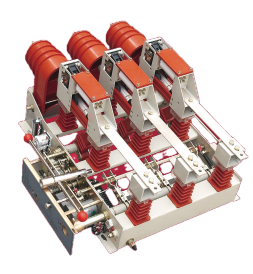
Vacuum Load Break Switch and Fuse Combination Apparatus
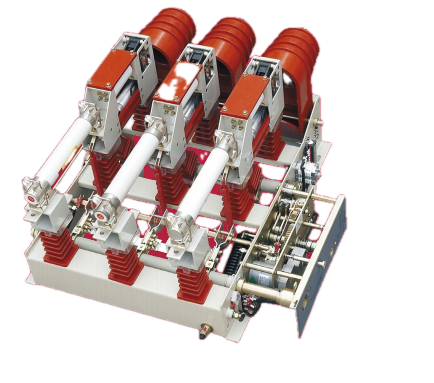
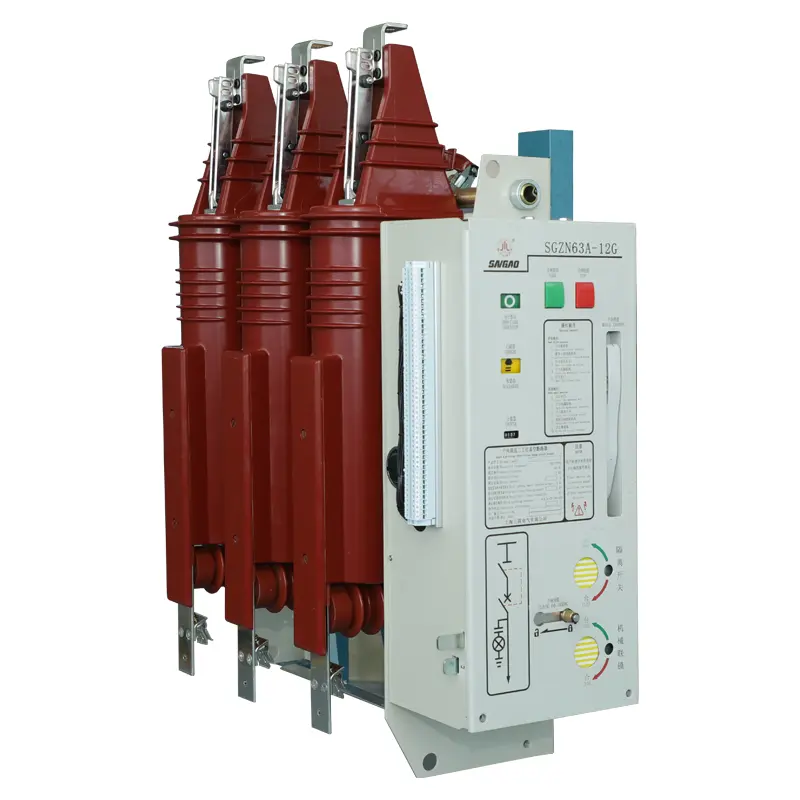
SanGao, a China manufacturer of medium-voltage distribution equipment, offers premium quality Vacuum Load Break Switch and Fuse Combination Apparatus. The apparatus serves two distinct roles. As a load break switch, it makes and breaks load current, closed‑loop current, no‑load transformer current, and cable charging current. When configured as a switch‑fuse combination, it employs striker‑pin actuation to open all three phases and interrupt any current up to the rated short‑circuit value upon fault detection. This dual capability eliminates the need for a separate circuit breaker in many feeder and transformer protection applications, endowing the load switch with rapid, economical and effective short-circuit protection functions
Send Inquiry
Product Description
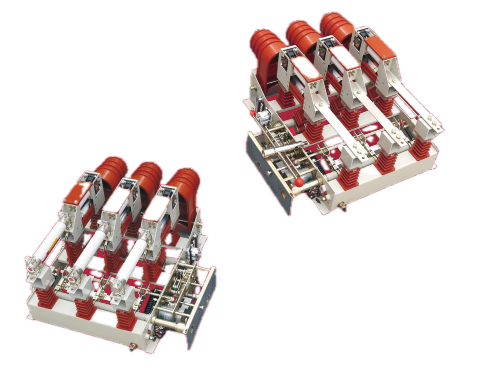
The Vacuum Load Break Switch and Fuse Combination Apparatus integrate a vacuum interrupter with a fuse‑trip coordination system. Under normal load conditions, the switch operates independently. When a fault current exceeds the fuse rating, the fuse striker pin mechanically triggers the switch trip mechanism, opening the main contacts and clearing the circuit. The directly‑acting isolating distance and interrupter open distance are achieved in a single stroke. A grounding shutter, interlocked with the earthing switch, provides a visible earth connection for maintenance. ated at 12 kV and 630 A with a 20 kA short-time withstand current, the apparatus is built for reliable service in both urban and rural distribution networks.
Working Principle
Inside the vacuum interrupter, the contacts are sealed in a high‑vacuum environment (typically below 10⁻⁴ Pa). When the contacts separate under load, a metal vapour arc forms from the evaporated contact material. However, because the vacuum contains virtually no gas molecules for ionization, the arc cannot sustain itself and extinguishes at the first natural zero‑crossing of the AC current. The metal vapour condenses rapidly on the contact surfaces and shielding, restoring dielectric strength within milliseconds. This arc‑quenching method requires no external media (oil or SF₆) and results in minimal contact erosion.
Product Advantages
Combined switching and protection
Our Vacuum Load Break Switch and Fuse Combination Apparatus perform routine load switching and, with fuses, provides short‑circuit interruption. This eliminates the need for a separate circuit breaker on each feeder, reducing capital expenditure.
Compact footprint
The drive mechanism reduces voltage stress on the interrupter outside the switching instant, allowing a smaller interrupter and overall apparatus size. This permits higher density layouts in ring main units and compact substations.
Single‑stroke operation
The isolating distance and interrupter open distance are achieved in one motion, simplifying the switching sequence and reducing the potential for operator error.
Visible earthing for safety
The grounding shutter, interlocked with the earthing switch, provides a physical and visual indication of isolation, enabling safe maintenance access without additional earthing devices.
SF₆‑free technology
Vacuum interruption eliminates greenhouse gas concerns and avoids the handling, leak testing, and refilling procedures associated with SF₆ equipment.
Fault Diagnosis
Frequent fuse operation typically indicates underlying system issues. The following are the primary causes and corrective measures:
System short‑circuit: When a short‑circuit occurs, the fault current melts the fuse element rapidly. The fault must be located and cleared (e.g., repair cable or replace faulty equipment) before replacing the fuse with the correct rating.
Sustained overload: Continuous operation above rated current generates excessive heat, causing the fuse to melt. Load must be reduced to within the apparatus rating, or the fuse rating must be upgraded in coordination with system protection studies.
Incorrect fuse selection: If the fuse element rating is too low for the application, nuisance operation will occur. Verify the fuse rating against the transformer or feeder capacity and replace with the properly sized element per the manufacturer coordination charts.
Technical Parameters
| Parameter | Value |
|---|---|
| Rated voltage | 12 kV |
| Rated current | 630 A |
| Short-time withstand current | 20 kA for 4 seconds |
| Earthing switch | Optional (designated D) |
| Operating mechanism | Spring mechanism (designated /T) |
Application Environments
Urban ring networks
The Vacuum Load Break Switch and Fuse Combination Apparatus serve as a sectionalizing switch in ring main units (RMUs). The compact dimensions, achieved through the drive mechanism design, allow higher-density switchgear configurations in space-constrained urban substations. The integrated earthing switch simplifies maintenance procedures, reducing outage times during scheduled work.
Industrial facilities
For industrial plants with multiple load centers, the Vacuum Load Break Switch and Fuse Combination Unit provides load switching at transformer incomers and feeder points. The switch-fuse combination option delivers short-circuit protection without the expense of a full vacuum circuit breaker, suitable for non-critical feeders where fault protection is provided upstream.
Rural distribution networks
Rural distribution presents specific challenges: long feeder lengths, variable loading, and voltage fluctuations. At the end of long 10kV feeders, voltage drop during peak load periods can be significant, resulting in low voltage at customer premises. The apparatus addresses this in two ways. First, installation at strategic points along long feeders allows network operators to sectionalize the line, isolating faults and reducing outage zones. Second, the apparatus can switch transformer taps and capacitor banks, allowing operators to manage voltage profiles more effectively. In rural contexts, the apparatus low maintenance requirement is particularly valuable – maintenance crews may travel considerable distances to reach a site, so equipment reliability between visits directly reduces operating costs.
FAQ
Q1: How does the vacuum interrupter extinguish the arc?
When the contacts inside the vacuum interrupter separate under load, a metal vapor arc forms between the contact surfaces. Because the interrupter maintains a high vacuum with few gas molecules available for ionization, the arc cannot sustain itself and extinguishes at the first natural zero-crossing of the current. This arc extinction method is efficient, fast, and requires no external arc-quenching media.
Q2: What causes frequent fuse operation, and how is it addressed?
Frequent fuse operation typically indicates system faults. The primary causes are: system short-circuit (the fault current melts the fuse element; the fault must be located and cleared before replacing the fuse with the correct rating), sustained overload (operation above rated current for extended periods; load must be reduced), or incorrect fuse selection (the fuse element rating is too low for the application; the fuse must be replaced with the correct rating).
Q3: Where are the Vacuum Load Break Switch and Fuse Combination Apparatus typically applied?
The apparatus is suitable for three-phase AC medium-voltage systems. Typical applications include ring main units (RMUs), compact substations, distribution line sectionalizing switches, and transformer protection when combined with fuses.
Q4: Can this apparatus replace a vacuum circuit breaker?
No. The apparatus is designed for load switching and, when equipped with fuses, provides short-circuit protection. A vacuum circuit breaker is designed to interrupt both normal load currents and short-circuit fault currents directly. For applications where upstream fault protection is already provided, this apparatus offers a more cost-effective solution than a full vacuum circuit breaker.
Why Choose SanGao?
1. Manufacturing capability
SanGao operates a 10‑mu (6,667 m²) site in Liushi, Zhejiang, with 10,000 m² of production floor space, housing dedicated assembly and testing lines for medium‑voltage switchgear.
2. Technical team
The company employs 120 staff, including 20 mid‑to‑senior level engineers covering mechanical design, high‑voltage insulation, and quality assurance. Registered capital is RMB 81.68 million, total assets approximately RMB 200 million.
3. Certified quality systems
Production is conducted under ISO 9001:2008, ISO 14001, and ISO 45001 certifications. These require documented supplier control, incoming inspection, in‑process checks, and final acceptance testing.
4. Process traceability
n ERP system tracks materials, manufacturing operations, and test records. Each unit is serialized with test data archived for full traceability.
5. Routine testing
Every apparatus undergoes dielectric withstand tests (main circuit and earth), mechanical operation tests under manual and electrical control, and contact resistance measurements. Sample units are subjected to short‑time current tests for 20 kA / 4 s validation.
6. Technical partnerships
SanGao collaborates with Xi'an Senyuan, Beijing Electrical Research Institute, and Xi'an High Voltage Research Institute for type testing and compliance with GB and IEC standards.
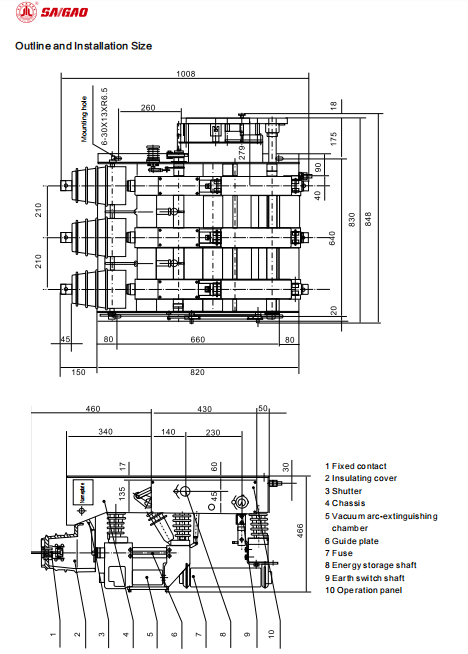
Component Breakdown
| No. | Component |
|---|---|
| 1 | Fixed contact |
| 2 | Insulating cover |
| 3 | Shutter |
| 4 | Chassis |
| 5 | Vacuum arc‑extinguishing chamber |
| 6 | Guide plate |
| 7 | Fuse |
| 8 | Energy storage shaft |
| 9 | Earth switch shaft |
| 10 | Operation panel |
Hot Tags: Vacuum Load Break Switch and Fuse Combination Apparatus
Related Category
Send Inquiry
Please Feel free to give your inquiry in the form below. We will reply you in 24 hours.
Related Products