

A reliable medium-voltage distribution system needs more than a switching device. It needs coordinated switching and protection that can respond to normal operating requirements as well as electrical faults. A Vacuum Load Break Switch and Fuse Combination Apparatus brings together load switching capability and fuse-based short-circuit protection in one coordinated assembly. This arrangement is commonly considered for transformer protection and compact distribution installations where dependable operation, equipment coordination, and efficient use of space are important.
1. Why Coordinated Medium-Voltage Protection Matters
Medium-voltage distribution networks supply power to transformers, industrial facilities, commercial buildings, infrastructure projects, and other electrical loads. These systems must handle routine switching while also limiting the consequences of abnormal conditions. A fault in a transformer or its associated circuit can cause excessive current, thermal stress, equipment damage, and unplanned interruption.
Using separate switching and protection devices may be appropriate in many installations. However, compact substations and transformer feeder arrangements often benefit from an integrated solution. Combining a vacuum load break switch with appropriately selected high-voltage current-limiting fuses can provide a practical approach to load control and short-circuit protection.
The important point is coordination. The switching device, fuse characteristics, transformer inrush current, system fault level, and downstream protection must be considered together. A combination apparatus should therefore be selected as part of the complete electrical design rather than treated as an isolated component.
2. What Is a Vacuum Load Break Switch and Fuse Combination Apparatus?
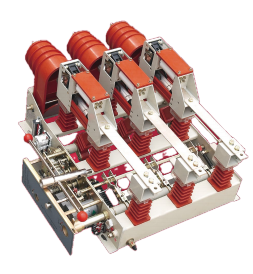
A vacuum load break switch and fuse combination apparatus is a medium-voltage switching and protection assembly that integrates a vacuum load break switch with high-voltage fuses. The switch is designed to make, carry, and interrupt specified normal load currents under its rated operating conditions. The fuses provide protection against short-circuit currents within their specified operating range.
The vacuum switching mechanism uses sealed vacuum interrupters as the arc-extinguishing medium. When the contacts separate, an arc forms briefly in the vacuum interrupter. The arc is extinguished as the current approaches its natural zero, and the dielectric strength between the contacts recovers rapidly.
The fuse elements respond to excessive current by melting and interrupting the fault current according to their time-current characteristics. Depending on the design, fuse operation can also initiate a mechanical tripping arrangement that opens the switch, helping isolate the affected circuit.
3. Main Components and Their Functions
Although the detailed construction varies by manufacturer and product series, a typical combination apparatus includes several functional assemblies.
3.1 Vacuum Interrupters
Vacuum interrupters contain fixed and moving contacts inside sealed insulating envelopes. Their purpose is to interrupt specified load currents by controlling the arc in a vacuum environment. The interrupter design, contact material, contact travel, and mechanical endurance all influence performance.
3.2 Operating Mechanism
The operating mechanism transfers manual or motor-driven operating energy to the switch contacts. Depending on the configuration, it may include springs, linkages, position indicators, and interlocking elements. Consistent mechanical movement is essential for correct switching performance.
3.3 High-Voltage Fuses
Fuses provide short-circuit protection for the protected circuit. Their rated voltage, current rating, breaking capacity, and time-current characteristics must match the system and the equipment being protected. Fuse selection is particularly important for transformer applications because normal magnetizing inrush must not cause unwanted operation.
3.4 Insulating Structure and Enclosure
Insulators, support structures, and the enclosure maintain electrical clearances and mechanical stability. The enclosure may also provide protection against accidental contact and environmental exposure according to the specified design.
3.5 Interlocking and Indication Devices
Mechanical and electrical interlocks help prevent unsafe operating sequences. Position indicators allow operators to identify the switch status. Some configurations may include auxiliary contacts, remote-control interfaces, or additional safety features.
| Component | Primary Function | Key Consideration |
|---|---|---|
| Vacuum interrupter | Interrupts specified load current | Rated switching duty and mechanical condition |
| Operating mechanism | Opens and closes the switch | Operating consistency and endurance |
| High-voltage fuse | Provides short-circuit protection | Rated current and time-current coordination |
| Insulation system | Maintains electrical isolation | Voltage rating and environmental suitability |
| Interlocking system | Helps prevent incorrect operation | Safety logic and compatibility |
4. How Vacuum Interruption Works
Vacuum interruption is based on the electrical characteristics of a sealed vacuum environment. When the switch contacts begin to separate while carrying current, a metal-vapor arc forms between them. This arc is supported by vapor generated from the contact surfaces.
As alternating current approaches its natural current zero, the arc weakens. The metal vapor rapidly condenses on the contacts and internal shields, allowing the gap to recover its insulating strength. If the recovery voltage and the interrupter's dielectric capability remain within the design limits, the current is successfully interrupted.
Why the Vacuum Environment Is Useful
- Rapid dielectric recovery: The contact gap can regain insulating strength quickly after current interruption.
- Compact construction: Vacuum interrupters can support compact switching arrangements.
- Reduced arc exposure: The arc is contained inside a sealed interrupter rather than occurring in open air.
- Low routine maintenance needs: The sealed interrupting chamber does not require routine replenishment of an arc-extinguishing gas or liquid.
These characteristics make vacuum technology useful in many medium-voltage switching applications. Nevertheless, actual performance depends on rated voltage, current, operating duty, contact condition, and the specific interrupter design.
5. How the Switch and Fuses Work Together
The combination apparatus is designed around two complementary functions. The vacuum load break switch handles specified normal switching operations, while the fuses respond to short-circuit currents within their rated protection range.
Normal Load Switching
When a transformer or feeder needs to be connected or disconnected under permitted load conditions, the switch operates through its mechanism. The vacuum interrupters control the switching arc. The fuses remain intact as long as the current stays within their operating characteristics.
Short-Circuit Protection
If a short circuit occurs, the current may rise rapidly. The fuse element heats and melts according to its time-current response. It then interrupts the fault current within its rated breaking capability. In designs equipped with a fuse striker and trip linkage, fuse operation can release the mechanism and cause the switch to open all phases.
Why Coordination Is Essential
Correct coordination helps avoid unnecessary fuse operation during transformer energization while ensuring that faults are cleared within the required limits. Engineers should review:
- Transformer rated power and primary voltage.
- Transformer magnetizing inrush current and duration.
- Available short-circuit current at the installation point.
- Fuse minimum melting and total clearing characteristics.
- Switch-fuse combination ratings and manufacturer coordination data.
- Protection requirements of upstream and downstream equipment.
6. Typical Operating Sequence
Operating details depend on the apparatus design and its interlocking arrangement. A simplified sequence helps explain how the equipment functions in a distribution installation.
- Pre-operation inspection: Confirm that the apparatus is in the required condition and that operating authorization and safety procedures are in place.
- Switch closing: The operating mechanism closes the switch contacts, establishing the intended electrical connection.
- Normal service: Current flows through the circuit while the apparatus operates within its rated limits.
- Load interruption: When an authorized switching operation is required, the mechanism separates the contacts and the vacuum interrupters extinguish the arc.
- Fault response: If a qualifying short-circuit condition occurs, the fuse operates according to its characteristics.
- Isolation and inspection: After a fault, the circuit must be handled under the approved isolation, testing, and maintenance procedures before being returned to service.
This sequence is explanatory only. Actual operating procedures must follow the equipment manual, site switching rules, and applicable electrical safety regulations.
7. Key Advantages in Distribution Systems
Integrated Switching and Protection
Combining switching and fuse protection in one assembly can simplify equipment arrangement and reduce the number of separately installed components. This is useful where a compact transformer feeder solution is required.
Compact Installation
Vacuum interrupter technology and integrated fuse mounting can support space-efficient switchgear layouts. This may be valuable in prefabricated substations, indoor distribution rooms, and industrial electrical installations.
Defined Fault Protection
When correctly selected, high-voltage fuses can interrupt high short-circuit currents within their specified ratings. Their operation is determined by established time-current characteristics, supporting predictable protection coordination.
Reduced Routine Maintenance of the Interrupting Medium
Because the interrupter is sealed, routine maintenance does not involve servicing an exposed arc chamber. However, the overall apparatus still requires inspection of its mechanism, insulation, fuse contacts, connections, and interlocks.
8. Common Applications
A vacuum load break switch and fuse combination apparatus may be considered in medium-voltage distribution systems where transformer switching and fuse protection are required.
- Distribution substations: Transformer feeder switching and protection in utility or private distribution networks.
- Industrial facilities: Power distribution for manufacturing plants, processing facilities, and production buildings.
- Commercial buildings: Medium-voltage transformer protection in large commercial developments.
- Prefabricated substations: Compact arrangements where installation space and equipment integration matter.
- Infrastructure projects: Electrical distribution systems serving transport, public facilities, and other infrastructure.
Suitability depends on system voltage, fault level, transformer characteristics, installation environment, and applicable local standards. The apparatus should be used only within its declared ratings and intended application.
9. Important Technical Selection Factors
Choosing the right apparatus requires a review of the complete electrical duty rather than a comparison of product dimensions alone.
| Parameter | Why It Matters | What to Verify |
|---|---|---|
| Rated voltage | Must match the network insulation level | System voltage and equipment voltage class |
| Rated current | Determines continuous current capability | Maximum expected operating current |
| Short-circuit level | Defines the required fault protection capability | Prospective fault current and fuse breaking capacity |
| Fuse characteristics | Influence transformer protection and inrush tolerance | Time-current curves and manufacturer selection data |
| Insulation level | Supports safe operation under specified dielectric stress | Power-frequency and impulse withstand ratings |
| Operating mechanism | Affects switching reliability and control arrangements | Manual or motor operation and interlocking needs |
Buyers should also confirm dimensions, cable connection arrangements, enclosure requirements, auxiliary contact needs, environmental conditions, and compatibility with the existing switchgear system.
10. Installation and Commissioning Considerations
Correct installation is essential to achieving the intended electrical and mechanical performance. Before installation, the project team should confirm that the delivered model matches the approved technical specification and drawings.
- Check the nameplate, rated values, product model, and supplied accessories.
- Inspect the enclosure, insulation components, fuse holders, and operating mechanism for visible damage.
- Verify mounting dimensions, clearances, cable access, and grounding arrangements.
- Confirm that the fuse type and rating match the approved protection design.
- Check mechanical operation and interlocking functions according to the manufacturer's instructions.
- Complete required electrical tests and commissioning checks under approved procedures.
Installation and commissioning must be performed by qualified electrical personnel. The equipment should remain isolated until all required checks have been completed and the responsible engineer has approved energization.
11. Maintenance and Reliability
Vacuum technology can reduce maintenance requirements associated with the arc-extinguishing medium, but it does not make the complete apparatus maintenance-free. A planned inspection program helps identify mechanical wear, loose connections, contamination, and other issues before they affect operation.
Recommended Inspection Areas
- Mechanical components: Check linkages, springs, operating handles, and mechanism movement.
- Electrical connections: Inspect accessible terminals and joints for signs of overheating or looseness.
- Insulation: Look for contamination, cracking, tracking, or other visible deterioration.
- Fuse assemblies: Confirm the correct fuse type and inspect holders and contact areas.
- Interlocks and indicators: Verify correct mechanical indication and interlock operation.
- Environmental conditions: Check for moisture, dust, corrosion, and inadequate ventilation.
Inspection intervals should be determined by the manufacturer's recommendations, operating frequency, environmental conditions, and applicable maintenance standards. After a fault or abnormal operation, the apparatus should be examined before it is returned to service.
12. Frequently Asked Questions
Q1: What is the main purpose of a vacuum load break switch and fuse combination apparatus?
It combines specified load switching functions with fuse-based short-circuit protection. It is commonly used in medium-voltage transformer feeder applications and compact distribution systems.
Q2: Why is vacuum technology used in the load break switch?
Vacuum provides a suitable environment for arc interruption. It supports rapid dielectric recovery after current zero and allows the interrupter to be housed in a sealed unit.
Q3: Can the apparatus replace every medium-voltage circuit breaker?
No. A switch-fuse combination has specific rated duties and application limits. It should not be treated as a universal substitute for a circuit breaker. The protection scheme must match the system fault level and operating requirements.
Q4: How are fuses selected for transformer protection?
Selection considers transformer power, primary voltage, inrush current, prospective fault current, fuse time-current characteristics, and coordination with other protective devices. Manufacturer application data should be used for final selection.
Q5: Does a vacuum interrupter require no maintenance?
The sealed vacuum chamber generally needs less routine attention than an exposed interrupting chamber, but the complete apparatus still requires inspection and maintenance according to the manufacturer's instructions.
Q6: Which information should buyers provide when requesting a quotation?
Useful information includes rated system voltage, rated current, transformer capacity, installation type, required fuse arrangement, short-circuit level, control requirements, and applicable standards.
13. Conclusion
A vacuum load break switch and fuse combination apparatus can provide a practical integrated solution for medium-voltage switching and transformer protection. Its value comes from the cooperation between the vacuum switching mechanism and appropriately selected high-voltage fuses. When the ratings and protection characteristics are correctly coordinated, the assembly can support compact equipment layouts and dependable operation in suitable distribution applications.
For engineers and procurement teams, the most important step is to evaluate the apparatus against the actual network conditions, transformer requirements, installation environment, and protection design. Reviewing these factors before purchase helps reduce compatibility problems and supports long-term system reliability.
About Zhejiang SanGao Electric Co., Ltd.
Zhejiang SanGao Electric Co., Ltd. focuses on electrical equipment and solutions for power distribution applications. When evaluating medium-voltage switching equipment, project teams should review the product's technical documentation, rated parameters, configuration options, and application suitability to ensure that the selected solution meets the requirements of the intended installation.
Looking for a Suitable Medium-Voltage Switching Solution?
Whether you are planning a transformer substation, upgrading a distribution system, or sourcing equipment for an industrial project, choosing the right switching and protection configuration is essential. Contact Zhejiang SanGao Electric Co., Ltd. to discuss your technical requirements, request product information, and identify a suitable solution for your application.
Contact us with your project voltage, transformer capacity, and equipment requirements to start a technical discussion.