
- English
- Español
- Português
- русский
- Français
- 日本語
- Deutsch
- tiếng Việt
- Italiano
- Nederlands
- ภาษาไทย
- Polski
- 한국어
- Svenska
- magyar
- Malay
- বাংলা ভাষার
- Dansk
- Suomi
- हिन्दी
- Pilipino
- Türkçe
- Gaeilge
- العربية
- Indonesia
- Norsk
- تمل
- český
- ελληνικά
- український
- Javanese
- فارسی
- தமிழ்
- తెలుగు
- नेपाली
- Burmese
- български
- ລາວ
- Latine
- Қазақша
- Euskal
- Azərbaycan
- Slovenský jazyk
- Македонски
- Lietuvos
- Eesti Keel
- Română
- Slovenski
- मराठी
- Srpski језик

How Does an Indoor High Voltage Disconnector Work?
An Indoor High Voltage Disconnector provides a practical way to isolate electrical circuits and manage power distribution safely. Understanding its contact mechanism, load-switching capability, rated current, and installation structure helps engineers select the right electrical isolation switch. In this article, SanGao explains how disconnectors work, what affects their performance, and where they are commonly used in electrical systems.
Table of Contents
- How Does an Indoor High Voltage Disconnector Work?
- Main Components and Their Functions
- How Does the Switching Process Work?
- Key Technical Specifications
- Installation and Wiring Considerations
- Common Applications
- How to Select the Right Disconnector
- Frequently Asked Questions
How Does an Indoor High Voltage Disconnector Work?
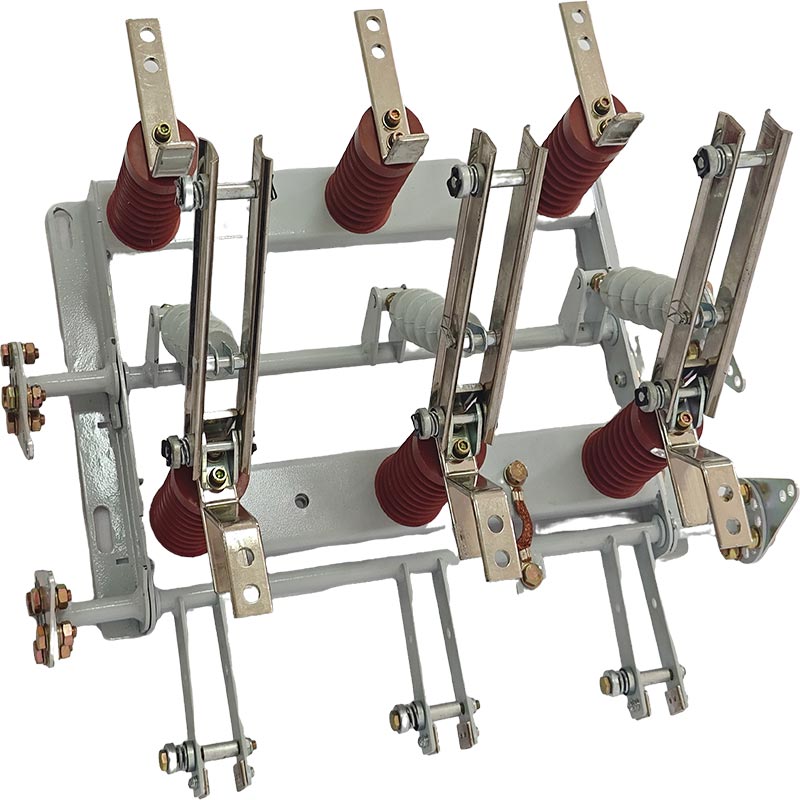
An Indoor High Voltage Disconnector works by mechanically connecting or separating electrical contacts to establish or interrupt a circuit connection. Its primary function is to provide an isolation point so that a section of an electrical system can be separated from the power supply during maintenance, inspection, or equipment replacement.
In a typical installation, the disconnector operates through a manually controlled handle or operating mechanism. When the handle moves from the ON position to the OFF position, the internal moving contacts separate from the fixed contacts. This creates an electrical gap between the connected terminals and establishes an isolation condition when the device meets the applicable isolation requirements.
When the handle returns to the ON position, the moving contacts reconnect with the fixed contacts, allowing current to flow through the circuit under the device's rated operating conditions.
At SanGao, we consider the contact structure, insulation performance, mechanical strength, and terminal arrangement together when evaluating an electrical isolation switch. These factors affect not only switching reliability but also the convenience of installation and long-term maintenance.
One important distinction should be made: a conventional disconnector is generally intended for isolation under no-load conditions, while a switch-disconnector is designed to perform switching under specified load conditions. The actual load-breaking capability depends on the product classification, rated operational current, and utilization category. For motor or highly inductive loads, these ratings must be checked rather than assumed.
Main Components and Their Functions
The performance of an Indoor High Voltage Disconnector depends on several mechanical and electrical components working together. Each part has a specific role in maintaining reliable contact, protecting internal connections, and supporting safe operation.
| Component | Main Function | Practical Consideration |
|---|---|---|
| Fixed Contacts | Provide stationary electrical connection points. | Contact pressure and surface condition affect connection reliability. |
| Moving Contacts | Connect or separate from fixed contacts during operation. | Mechanical alignment helps maintain consistent contact engagement. |
| Operating Handle | Controls the ON and OFF positions. | A lockable handle helps prevent unauthorized or accidental operation. |
| Insulating Housing | Supports electrical insulation and protects internal components. | UV resistance and flame-retardant properties are important for demanding environments. |
| Mounting Base | Supports the switch and provides space for electrical connections. | A base-mounted design can make cable termination more convenient. |
| Cable Terminals | Connect incoming and outgoing conductors. | Correct conductor preparation and tightening torque are essential. |
| Weatherproof Gasket | Helps prevent water and dust from entering the enclosure. | Correct sealing and conduit installation are necessary to maintain the specified IP rating. |
For outdoor installations, the enclosure and sealing structure deserve particular attention. SanGao's described disconnector design uses an impact-resistant base and cover with integrated weatherproof gaskets. The housing also uses UV-resistant and flame-retardant materials to support installation in different environmental conditions.
How Does the Switching Process Work?
Understanding the operating sequence helps explain why a disconnector is important in power distribution. In practical applications, switching should follow the electrical system's operating procedure rather than simply relying on the position of the handle.
1. Normal Operating Condition
When the disconnector is in the ON position, the moving and fixed contacts remain connected. Current passes through the conductive path to supply the downstream electrical equipment. The contact system must maintain stable electrical connections during normal operation.
2. Circuit Isolation
Before maintenance, the relevant circuit should first be de-energized using the appropriate upstream switching and protection devices. Once the circuit is confirmed safe for operation, the disconnector can be moved to the OFF position according to the manufacturer's instructions.
The separated contacts establish the required isolation function. A lockable handle provides an additional measure against accidental operation while maintenance work is being performed.
3. Maintenance and Inspection
After isolation, qualified electrical personnel should verify the absence of voltage using an appropriate testing procedure. They should also follow the required lockout and tagout process before accessing electrical components.
During routine inspection, we recommend checking terminal tightness, contact condition, housing integrity, sealing gaskets, and operating handle movement. Loose connections or damaged seals should not be ignored because they may affect electrical reliability and enclosure protection.
4. Restoring Power
After maintenance is completed, tools and temporary connections should be removed, protective covers restored, and the work area checked. The isolation and switching devices can then be returned to their normal operating positions following the approved energization procedure.
Key Technical Specifications of SanGao Indoor High Voltage Disconnector
When comparing electrical isolation switches, rated current is only one part of the selection process. Pole configuration, enclosure protection, installation dimensions, terminal compatibility, and switching category also influence whether a particular model is suitable for an electrical project.
Based on the product information provided by SanGao, the main specifications are summarized below.
| Parameter | Product Specification |
|---|---|
| Product Name | Indoor High Voltage Disconnector |
| Rated Current Range | 20A–63A |
| Pole Configuration | Single Pole, Double Pole, Triple Pole |
| Protection Rating | IP66 |
| Housing Material | UV-Resistant and Flame-Retardant Material |
| Conduit Entries | 25mm Double-Threaded Entries at Both Ends |
| Compatible Conduit Sizes | 20mm and 25mm |
| Terminal Aperture | 5–6mm |
| Overall Dimensions | 165mm × 82mm × 85mm |
| Handle Design | Lockable Operating Handle |
| Standard | IEC 60947-3 (as specified in the product information) |
| Standard Color | Gray |
| Warranty | 5 Years |
For installation planning, the 165mm × 82mm base dimensions provide a useful reference for allocating mounting space. The 20A–63A current range also offers several options for different circuit requirements. However, the rated operational voltage, frequency, insulation characteristics, and utilization category should be confirmed from the model-specific nameplate and technical datasheet before final selection.
Installation and Wiring Considerations
Even a well-designed disconnector can experience operating problems if the installation is not carried out correctly. In our experience, cable termination, enclosure sealing, and mounting position are three details that deserve particular attention.
Base Mounting and Wiring Space
SanGao's base-mounted design provides additional space for cable termination and makes wiring more convenient. This arrangement is particularly useful when several conductors need to be routed within a relatively compact electrical installation.
Terminal Connection
The product information specifies a 5–6mm terminal aperture and a double-clamping-screw arrangement for installing grounding and neutral bars. Conductors should be prepared according to the terminal design, and the manufacturer's specified tightening torque should be followed. Incorrect cable stripping or uneven clamping may result in loose connections and localized heating.
Conduit and Sealing Installation
Both the upper and lower sides are equipped with 25mm double-threaded conduit entrances. The supplied threaded plugs and reducers allow connections to 25mm or 20mm conduits.
For installations requiring IP66 protection, all cable entries must be properly fitted with compatible threaded accessories and sealing components. An incorrectly installed conduit fitting or missing nut can compromise the enclosure's protection rating even if the switch housing itself meets IP66 requirements.
Mechanical Protection and Locking
The housing is designed to resist installation impacts, while the integrated gasket helps maintain the weatherproof seal between the base and cover. A 7mm diameter locking hole is provided at the base to secure the operating lever in the specified closed position. The handle's protective molding also helps reduce the risk of accidental operation or physical damage.
For metal mounting structures, suitable insulating protection should be used to prevent mounting screws from creating an unintended electrical hazard. Installation and grounding arrangements must comply with the applicable electrical codes and the manufacturer's instructions.
Common Applications of Indoor High Voltage Disconnectors
Electrical isolation switches are used in different power distribution and equipment control environments. The required configuration depends on the circuit voltage, load characteristics, operating frequency, and installation conditions.
Solar Power Systems
In photovoltaic installations, isolation devices help separate electrical sections during inspection, maintenance, or equipment replacement. The appropriate switch must be selected according to whether it is installed on the AC or DC side, since DC switching requires specific ratings and arc-control capabilities.
Air Conditioning Systems
Air conditioning equipment often includes compressors, fans, and other electrical loads. A suitably rated local isolation switch can provide a convenient disconnection point for servicing. Where the switch is expected to operate under load, its utilization category and motor-load switching capability must be verified.
Industrial Electrical Distribution
In industrial facilities, disconnectors can be incorporated into distribution panels and equipment connection points to support maintenance isolation. Single-pole, double-pole, and triple-pole configurations allow engineers to select a suitable arrangement based on the circuit design.
Outdoor Electrical Equipment
Although the product is described as an Indoor High Voltage Disconnector, its IP66 enclosure and weather-resistant construction also make the specified series suitable for certain outdoor installations. The final application should account for ambient temperature, UV exposure, water ingress, mounting conditions, and the protection requirements of the complete installation.
How to Select the Right Indoor High Voltage Disconnector?
Choosing a disconnector based only on its rated current can lead to compatibility problems. We recommend evaluating the following factors before confirming a model for a project.
| Selection Factor | What to Check | Why It Matters |
|---|---|---|
| Rated Voltage | System voltage and AC/DC requirements | Ensures compatibility with the electrical network. |
| Rated Current | 20A, 32A, 40A, 50A, or 63A model requirements | Helps match the device to the circuit's operating current. |
| Pole Configuration | Single-pole, double-pole, or triple-pole | Determines which conductors are isolated simultaneously. |
| Load Type | Resistive, inductive, or motor loads | Determines the required switching category and breaking capacity. |
| Protection Rating | IP rating and environmental exposure | Helps prevent dust and water from entering the enclosure. |
| Installation Space | Mounting dimensions and cable entry positions | Reduces wiring difficulties during installation. |
| Applicable Standard | IEC 60947-3 and relevant product requirements | Helps verify the intended device category and performance. |
For example, a 40A three-pole model may be considered for a three-phase electrical installation, but the final choice should also account for the system voltage, load current, utilization category, and required isolation arrangement. For motor applications, checking the actual motor switching rating is more useful than relying on the rated current alone.
As a manufacturer integrating R&D, design, production, and sales, Zhejiang SanGao Electric Co., Ltd. focuses on the development of high-voltage power transmission and distribution equipment. We understand that different projects may have different requirements for electrical configuration, installation structure, and operating conditions. Providing the correct technical information before model confirmation helps avoid unnecessary changes during installation.
Frequently Asked Questions
1. What is the main function of an Indoor High Voltage Disconnector?
Its main function is to provide an electrical isolation point by separating conductive contacts. This allows a circuit or equipment section to be isolated for inspection and maintenance. The device must meet the applicable isolation requirements, and additional switching capabilities depend on its specific product classification.
2. Can an Indoor High Voltage Disconnector switch electrical loads?
Not every disconnector can interrupt current under load. A conventional disconnector is generally operated after the circuit has been de-energized by an appropriate switching device. A switch-disconnector can perform specified load switching when its rated operational current and utilization category permit it.
3. What does IP66 protection mean?
IP66 indicates that the enclosure is dust-tight and protected against powerful water jets under standardized test conditions. It does not mean the device can be submerged in water or that incorrectly installed cable entries will retain the same protection level.
4. What rated current options are available for the SanGao series?
According to the supplied product information, the series covers rated currents from 20A to 63A. It includes single-pole, double-pole, and triple-pole configurations. The exact current ratings available for each model should be confirmed with the product datasheet.
5. Can this disconnector be installed outdoors?
Yes. The described series is designed for indoor and outdoor applications and features an IP66 enclosure, UV-resistant materials, and weatherproof gaskets. Correct conduit connections and sealing installation are necessary to maintain the specified protection level.
6. What is the operating temperature range?
The supplied environmental specifications indicate an ambient temperature range of approximately -30°C to +40°C for general installation areas. Actual operating limits should be checked against the specific model's technical documentation.
7. Which standard does the product comply with?
The product information identifies IEC 60947-3 as its applicable standard. This standard covers low-voltage switches, disconnectors, switch-disconnectors, and fuse-combination units. The specific device classification and rated voltage should be verified from the manufacturer's documentation.
8. How long is the product warranty?
SanGao's supplied product information specifies a five-year warranty, together with product insurance and recall insurance. Customers can confirm the applicable warranty coverage and conditions when discussing their project requirements.
Conclusion
An Indoor High Voltage Disconnector is an important component in electrical isolation and power distribution systems. Its working principle is based on the controlled movement of electrical contacts, while its practical performance depends on contact reliability, insulation, mechanical construction, terminal connections, and environmental protection.
For electrical engineers and equipment integrators, selecting the right device means looking beyond the rated current. Voltage compatibility, pole configuration, load-switching capability, IP protection, and installation requirements all need to be considered together.
At SanGao, we integrate R&D, design, production, and sales to serve the power transmission and distribution equipment industry. Our product range and engineering experience support different electrical equipment requirements. For more information about our high-voltage power transmission equipment, please visit our official website.