
- English
- Español
- Português
- русский
- Français
- 日本語
- Deutsch
- tiếng Việt
- Italiano
- Nederlands
- ภาษาไทย
- Polski
- 한국어
- Svenska
- magyar
- Malay
- বাংলা ভাষার
- Dansk
- Suomi
- हिन्दी
- Pilipino
- Türkçe
- Gaeilge
- العربية
- Indonesia
- Norsk
- تمل
- český
- ελληνικά
- український
- Javanese
- فارسی
- தமிழ்
- తెలుగు
- नेपाली
- Burmese
- български
- ລາວ
- Latine
- Қазақша
- Euskal
- Azərbaycan
- Slovenský jazyk
- Македонски
- Lietuvos
- Eesti Keel
- Română
- Slovenski
- मराठी
- Srpski језик

SanGao Three‑Phase Circuit Breaker Module – Features, Control Modes, and Application Insights
Abstract
Three‑phase circuit breakers are critical components in modern power distribution infrastructure, especially in commercial and industrial environments. Unlike single‑phase breakers used in residential settings, these devices are engineered to handle higher voltages and larger electrical loads. The SanGao three‑phase circuit breaker module offers flexible control via external signals or internal timers, providing reliable isolation, overload protection, and manual switching capabilities. This article presents a comprehensive technical overview of the module’s features, operating modes, key specifications, application scenarios, and safety mechanisms, helping engineers and system integrators make informed decisions for robust electrical system design.
Table of Contents
With the rapid growth of industrial automation and commercial power distribution, three‑phase circuit breakers have evolved from simple protective devices into intelligent units that combine control, protection, and isolation. The SanGao three‑phase breaker module, compatible with Simulink simulation environments, provides two flexible control modes: external signal control (0 V for open, positive voltage for close) and internal timer‑based control (preset switching times). This versatility greatly simplifies system integration and testing. In this article, we delve into the technical details of this module and offer practical guidance on selection and application.
✦ ✦ ✦
1. Three‑Phase Circuit Breaker Module Overview
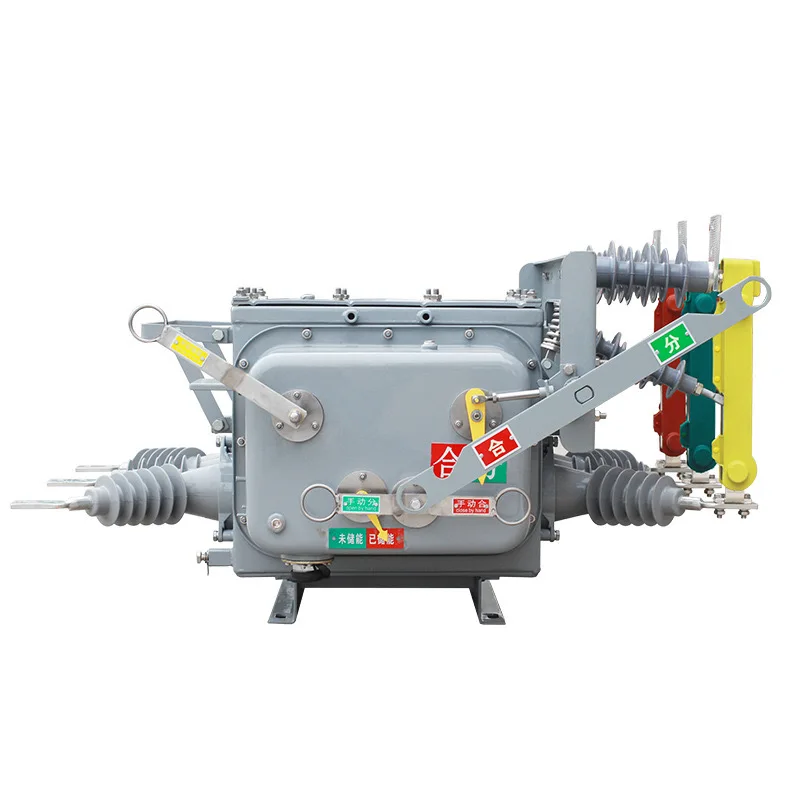
The SanGao three‑phase circuit breaker module consists of three independent single‑pole breakers mechanically interlocked to operate simultaneously via a single toggle handle. It can be connected in series with three‑phase loads to control all phases at once. The arc‑extinguishing mechanism is identical to that of standard circuit breakers, and the module includes built‑in Rs‑Cs snubber circuits to suppress switching overvoltages – essential when connected to inductive loads or current sources.
Isolation Switch
Provides a visible disconnect from the power supply with a single handle operating all three poles simultaneously – also serves as a safety switch.
Circuit Protector
Each pole has a rated current (e.g., 5A) with overload tripping. Upon overload, the handle moves to the "off" position and cannot be forcibly closed until the fault is cleared – known as "trip‑free" operation.
Manual Control Switch
With its special time‑delay series‑tripping characteristic and high short‑circuit breaking capacity, it can be used as a direct motor on/off control switch within its rating – also called a motor circuit switch.
Simulation & Control
Supports external control mode (via Simulink input, 0 = open, positive = close) and internal control mode (set switching times in the dialog box). All three poles respond to the same control signal.
✦ ✦ ✦
2. Core Functions and Operating Modes
The SanGao three‑phase breaker offers two control modes to suit different application needs. In external control mode, the module icon displays a control input port, allowing real‑time switching via Simulink signals. In internal control mode, switching times are pre‑set in the dialog box for automatic timing sequences. In both modes, the same control signal drives all three breakers, ensuring synchronous operation.
2.1 Role of the Snubber Circuit
When the breaker is connected to inductive loads (e.g., motors, transformers) or current sources, opening the circuit can generate high induced overvoltages that may damage insulation or the breaker itself. The built‑in Rs‑Cs snubber circuit effectively absorbs this energy, limiting overvoltage peaks and protecting both the breaker and downstream equipment. Users can choose to enable or disable this circuit depending on the load type.
2.2 Trip Characteristics and "Trip‑Free" Mechanism
The "trip‑free" feature ensures that when an overload or short circuit occurs, the internal mechanism forces the contacts open and the handle moves to the tripped position. Attempting to push the handle closed will not re‑close the contacts until the fault is cleared and the handle is reset. This provides an intrinsic safety barrier, preventing re‑energisation while a fault persists.
- External signal control (0 V / positive voltage)
- Internal timer control
- Rs‑Cs snubber circuit (optional)
- Trip‑free mechanism
- Time‑delay series tripping characteristic
- High short‑circuit breaking capacity
✦ ✦ ✦
3. Key Technical Specifications Explained
Selecting the right three‑phase breaker requires a thorough understanding of its technical parameters. The table below summarises the main specifications of the SanGao module and their practical implications for selection.
| Specification | Typical Value / Description | Impact on Selection |
|---|---|---|
| Rated Current (per pole) | 5A (customisable) | Determines the maximum continuous operating current; must exceed the load’s maximum steady‑state current. |
| Number of Poles | 3 poles (simultaneous operation) | Suitable for three‑phase three‑wire or four‑wire systems; ensures all phases are switched together. |
| Control Mode | External signal / Internal timer | External mode suits remote automation; internal mode fits fixed‑timing applications. |
| Trip Characteristic | Time‑delay series tripping | Allows short‑term overloads (e.g., motor starting) without nuisance tripping. |
| Short‑Circuit Breaking Capacity | High (check specific model data) | Must exceed the prospective short‑circuit current at the installation point to safely clear faults. |
| Snubber Circuit | Built‑in Rs‑Cs, optional | Essential for inductive loads to protect the breaker and load. |
Selection Tip: In addition to current and breaking capacity, consider ambient temperature, altitude, and mounting style. Consult SanGao’s technical support for tailored recommendations.
✦ ✦ ✦
4. Industrial Applications and Selection Guide
Three‑phase circuit breakers are widely used in motor control centres, distribution panels, industrial automation equipment, and commercial building supplies. Depending on the application, they can serve as main switches, branch protection devices, or motor operating switches. Below are typical use cases and selection pointers.
4.1 Major Application Areas
- Industrial Motor Control: Used as direct‑on‑line starters, requiring a time‑delay trip characteristic to avoid tripping on inrush current.
- Distribution Line Protection: Installed in main or sub‑distribution boards to protect against overloads and short circuits, with proper coordination with upstream/downstream devices.
- Emergency Generator Sets: Acts as the generator output breaker, providing isolation and withstanding possible transient overcurrents.
- HVAC Systems: Protects compressors, fans, and other motors in air conditioning and refrigeration equipment – also needs time‑delay characteristics.
4.2 Selection Steps
- Determine load type: Resistive or inductive? Does it have starting inrush? This decides the required trip characteristic.
- Calculate operating current: Based on load power and voltage, compute the maximum line current and add a 20–30% safety margin.
- Estimate short‑circuit current: Obtain the prospective short‑circuit current from the supply system; the breaker’s breaking capacity must be higher.
- Choose control mode: External signal control if remote/automatic operation is needed; internal timer if only scheduled switching is required.
- Consider snubber requirement: For inductive loads (motors, transformers), always enable the snubber circuit.
✦ ✦ ✦
5. Safety Protection Features
Safety is the foremost priority in electrical design. The SanGao three‑phase breaker incorporates multiple protection mechanisms that safeguard not only the circuit and equipment but also personnel.
- Overload Protection: Thermal‑magnetic trip unit opens the circuit when current exceeds the rated value for a sustained period, preventing cable overheating.
- Short‑Circuit Protection: Magnetic trip acts instantaneously in the event of a short circuit, cutting off fault current within milliseconds to minimise damage.
- Isolation Function: With the handle in the "off" position, sufficient contact gap and insulation distance provide a visible break, meeting isolation requirements.
- Trip‑Free Anti‑Reclosure: Prevents re‑closing while a fault persists, eliminating the risk of human error.
Safety Reminder: Before any installation, maintenance, or replacement, always verify that upstream power is completely disconnected and test for zero voltage. Follow all local electrical safety codes.
✦ ✦ ✦
Frequently Asked Questions
What does "trip‑free" mean in a three‑phase breaker?
"Trip‑free" means that when an overload or short circuit occurs, the internal mechanism forces the contacts open and the handle moves to the tripped position. The handle cannot be held closed manually while the fault exists, ensuring the circuit cannot be re‑energised until the fault is cleared and the handle is reset.
What is the difference between external and internal control modes?
In external control mode, the module receives a signal from a Simulink input (0 = open, positive = close), making it suitable for integration with automation systems. In internal control mode, the user sets opening/closing times directly in the module’s dialog box, and the breaker follows that preset schedule – ideal for fixed‑timing or cyclic operations.
When must the snubber circuit be used?
Whenever the breaker is connected to inductive loads (motors, transformers, reactors) or current sources, switching off can generate high induced overvoltages. The Rs‑Cs snubber circuit is essential to absorb this energy. The module includes a built‑in snubber that can be enabled as needed.
How do I choose the right trip characteristic for motor loads?
Motors draw 5–7 times their rated current during starting. A breaker with instantaneous tripping would trip unnecessarily. Therefore, select a breaker with a time‑delay series‑tripping characteristic (inverse‑time overload protection) that allows short‑term overcurrents while still protecting against sustained overloads and short circuits. The SanGao module’s delay characteristic is designed for this purpose.
Can the three poles be operated independently?
No. The internal mechanical interlock ensures all three poles are operated by a single handle, guaranteeing simultaneous make/break. This prevents phase‑loss conditions that could damage three‑phase equipment.
How can I verify the breaker’s breaking capacity is adequate?
The breaking capacity must be greater than the prospective short‑circuit current at the installation point. This value is typically provided by the system designer or obtained from a short‑circuit study. The breaker’s rated breaking capacity is specified in its datasheet; ensure it meets or exceeds the calculated value.
✦ ✦ ✦
Choose Reliable Three‑Phase Protection for Your Power System
Whether for industrial motor control, commercial distribution, or automation equipment, the SanGao three‑phase circuit breaker module delivers safe, flexible, and reliable protection and control. Contact us today for expert selection support and sample testing.
Request a Quote